MILOEK
Militärökonomische Forschung und Lehre
Research and Courses in Economics of Defense


E
Online: * August 2012


First Version: June 2012
This Version: November 2013
This Version: November 2013

forward

back

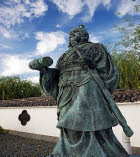
A statue of legendary
Sun Tzu in Japan
Sun Tzu in Japan
Tsze-lu said, „The ruler of Wei has been waiting for you, in order with you to administer the government. What will you consider the first thing to be done?”
The Master replied, “What is necessary is to rectify names.”
“So! Indeed!” said Tsze-lu. „You are wide of the mark! Why must there be such rectification?“ …
„If names be not correct, language is not in accordance with the truth of things. If language be not in accordance with the truth of things, affairs cannot be carried on to success.”
The Master replied, “What is necessary is to rectify names.”
“So! Indeed!” said Tsze-lu. „You are wide of the mark! Why must there be such rectification?“ …
„If names be not correct, language is not in accordance with the truth of things. If language be not in accordance with the truth of things, affairs cannot be carried on to success.”
The Analects of Confucius, Book 13, Verse 3 <Rectification of Names>, www.analects-ink.com
The following pages sketch an economic model of military conflict. The model serves three main purposes. First, it shows how strategy, tactics and other military key issues can be related to the economic concept of cost-benefit-analysis. Second, it sketches how the optimal force allocation can be determined for a specific campaign. Third, it provides a foundation to incorporate the game-theoretic analysis into standard military decision theory.
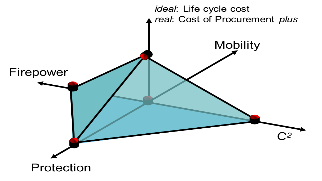
The primary function of a military unit is to enforce the political will of a democratic society by deterrence or by the actual use of violence against threats beyond the level of a terrorist cell, i.e., the enemy represents at least an insurgency movement. Simplifying the corresponding analysis by using a high level of resolution, the performance potential of military units depends on their capabilities along four dimensions: a) firepower b) protection c) communication and control (= C^2) d) mobility.
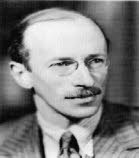
Basil H. Liddell Hart
(*1890 †1970)
(*1890 †1970)
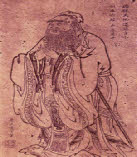
Confucius
(*551 BC †479 BC)
(*551 BC †479 BC)