
MILOEK
Militärökonomische Forschung und Lehre
Research and Courses in Economics of Defense


E
Online: * August 2012


Some Annotations to the Economic Factors Shaping
the International Environment in the 21st century I
the International Environment in the 21st century I
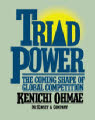
Globalization implies the transformation from a world order dominated by the Triad {US-Europe-Japan →Kennichi Ohmae (1989)} to a multi-polar world of trading blocks North America-South America-Europe-Asia with higher levels of mobility for capital and workforce.
|
n
|
Due to communication technologies gaining more and more an ubiquitous character and because of the use of English as the lingua franca there is a general trend to lowering transaction costs.
|
|
n
|
This will also decrease the educational advantages of the West. For example, this effect, has its roots in the internationalization of education standards and in the education opportunities offered to the global community via the Internet by channels like “Wikipedia”, “Math Help Forums” or “Classroom Videos”.
|
|
n
|
The global competition for resources increases, for example, in a “New Scramble for Africa” or the alliance between China and Pakistan trying to become the major cooperation partner to the Karzai regime after the withdrawal of the Allied troops in 2014.
|
|
n
|
The stronger international competition will reduce super-profits of monopolistic suppliers.
|
|
n
|
All these effects imply challenges to the Western economies. However, there are also some effects that are more beneficial:
|
|
n
|
The international division of labor will rise.
|
|
n
|
The lower prices are an advantage to Western consumers.
|
|
n
|
The opportunities to invest in other countries increases and this offers better opportunities to diversify (national) risks.
|
|
n
|
The rising income of Asia will lead to more demand for Western products.
|
Thus, globalization means an enlargement of the world economy and an increasing speed of innovation: While there is to be expected a positive trend for the world economy as a whole, the next decades should be considered as a period of transformation characterized by increasing volatility: The global drive for innovations will also result in more bubbles in shorter intervals ─ for example, due to the introduction of new financial instruments, similar to the hype about asset backed securities (developed to offer an improved international diversification effect while neglecting the importance of local informational advantage).


forward

back
First Version: October 2012
This Version: November 2012